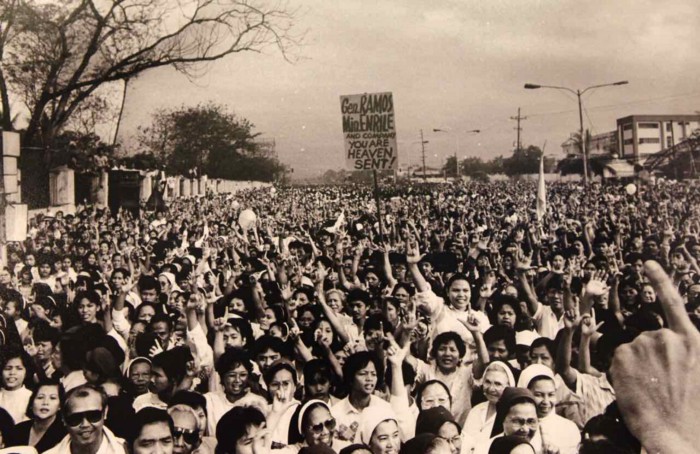
Photo from CPU
The legacy of the underground movement in modern Philippines is a long story of ordinary people who made extraordinary choices in extreme circumstances. They were the architects of activism, building a secret network to fight a powerful dictatorship.
Without their silent attempts, a country would perhaps still be within the grip of a dictator.
Who Were These Architects of Activism?
Despite some claims, the architects of activism were not soldiers. They were students, teachers, and young people who believed in fighting for freedom and justice. They joined a secret movement, often called the “underground,” to oppose the rule of President Marcos of the Philippines.
Life under his rule was dangerous.

Photo from CNN
The government could arrest anyone without reason, especially under the imposition of martial law, which was a key reason for the underground movement’s formation and the heightened risks activists faced.
But they were driven by a deep desire to help the poor and oppressed.
One woman, Maya Butalid, joined after seeing police brutality at a student protest.
“I thought to myself, ‘This was something I could be passionate about—to fight for freedom, to fight for what is right, and most especially, to fight for the plight of the poor and oppressed’… I wanted to be part of this movement.”
Living a Life in the Underground
The phrase “architects of activism” conjures images of individuals who dare to challenge the status quo, designing movements that disrupt established systems in pursuit of justice and equality.
In the Philippines, this term has come to represent those who bravely opposed the Marcos dictatorship—people who transformed their convictions into action.
As an activist during those times, to avoid being apprehended by authorities, Maya and other activists had to engage in clandestine activities, always careful to keep their operations secret. They had to use fake names to hide their identities. Maya had several, like Joesen, Carmen, and Georgia. She got so used to her fake name that when her mother called her by her real one, she didn’t respond.
They lived in “UG houses” – secret safe houses. For safety, they had to move to a new house every six months. Each month brought new challenges and changes, as they constantly adapted to shifting risks and patterns in their lives. They owned very few things so that they could move quickly. They could not keep photos of family or friends. If the police found these, it would put their loved ones in danger.
Despite the constant fear, they found joy. They shared meals, told jokes, and supported each other. There was a strong sense of solidarity among members of the underground movement, which helped them endure hardships together.
“Life in the underground movement was not all hard work. There was also lots of laughter and fun.”
The People of the Underground Movement
The underground movement and the restoration of democracy in the Philippines were historical moments that were the result of decades of sacrifice and the relentless pursuit of justice.
Its roots stretch to the 1960s, when a new generation of students and labor leaders began to challenge the growing authoritarianism of the Marcos dictatorship, and beyond. Multiple universities quickly became a focal point for this activism, with their campuses serving as meeting places for passionate debates, organizing sessions, and the birth of new ideas that would shape the nation’s future.
Aside from Maya Butalid, whose journey as a political activist and migrant advocate has inspired many even to this day. There was Bernabe “Kumander Dante” Buscayno, founder of a militant group, who was imprisoned during EDSA; Edgar Jopson, a prominent student activist; Lorena Barros, who was a leading student feminist activist; Leandro Alejandro, a student leader who became a key figure leading up to and after EDSA; and many, many more, both named and unnamed.
These individuals, often at significant personal risk, helped lay the foundation for a movement that would endure for years.
After the Toppling of a Dictator
For many, the dream of revolution began to fade. The leaders of the movement sometimes seemed out of touch. Maya remembers a leader who, when Nelson Mandela was freed, was only jealous of the celebration Mandela received. She realized some leaders had “delusions of grandeur.”
The movement was also very top-down. Orders came from the top with little explanation.

Photo by tirachard
As Maya observed how other movements in the world practiced democracy and transparency, her growing disillusionment with the movement became clear. This marked a significant turn in her perspective, as she began to doubt whether true democracy could ever be achieved within the movement.
“How could we then implement democracy in the government we want to set up if we ourselves do not practice it?”
Eventually, many made the painful decision to leave. For Maya, it was a 16-year chapter of her life. But she has no regrets.
“I learned a lot in those years… I developed a deep affinity for the poor and disadvantaged sectors of society.”
Echoes of Resistance in Today’s Philippines
The works of these architects of anarchy helped bring attention to the injustices under the dictatorship. Their protests, both secret and public, kept the spirit of resistance alive. They showed that ordinary people could stand up to power.
The legacy of the underground movement in modern Philippines is complex. It is a story of great courage and deep idealism, but also of complex questions and hard choices. The men and women who were part of it helped shape the nation’s fight for democracy and played a significant role in advancing human rights in the Philippines.
As the Philippines moves forward, the importance of public engagement cannot be overstated.
The challenges facing the Philippines—poverty, inequality, and the ongoing struggle for human rights—require the continued involvement of advocates and the support of the global community.
Looking ahead, the prospects for peace and progress in the Philippines rest on the shoulders of those who refuse to forget, who continue to log in, speak out, and build connections across borders.
To read the full, incredible true story of life inside the Philippine underground movement, get your copy of Maya Butalid’s book, Chasing Windmills, as soon as possible!