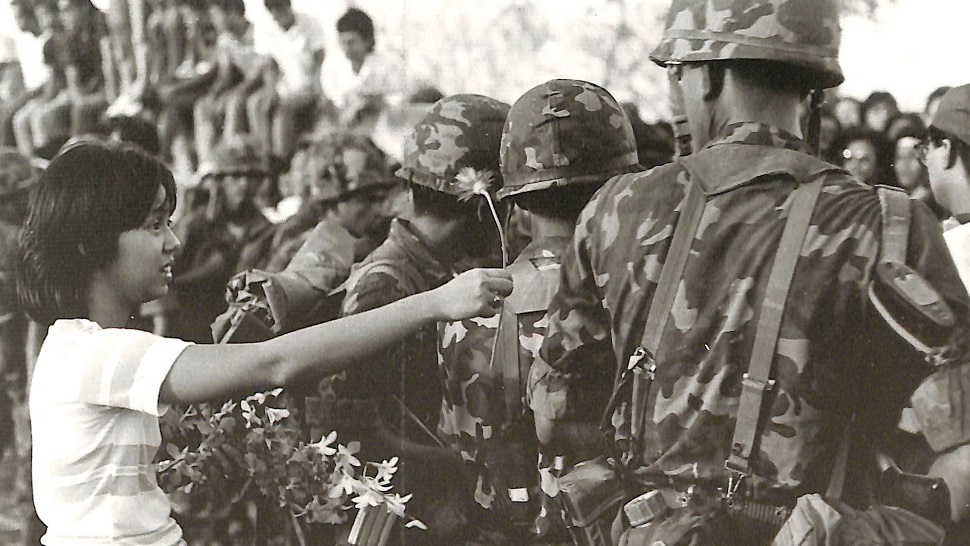
Photo by Esquire
The legacy of the underground movement in modern Philippines lives in people like Maya Butalid, who risked everything for human rights advocacy during Martial Law.
Her book Chasing Windmills tells the story of ordinary Filipinos who did extraordinary things when the government silenced its own people.
From 1972 to 1981, President Marcos ruled by decree with no elections, no free press, and the very act of speaking against the government meant prison, torture, or death.
“I did it because I was driven to do what I felt was the right thing to do.”

Photo by freepik
The underground movement was made up of students, workers, farmers, and church people who said “no” to this injustice, as Maya did. They did not have weapons, nor did they have money.
What they had was courage and the will to make the world a better place.
“My eyes were opened, never to be closed again, and my view of Philippine society was broadened. I realized that the social problems I saw in the neighborhood where I grew up as a child were actually just a representation of what was really happening in the rest of the country.”
Acting Against Tyranny in Secret
When the government closes all legal doors, people must meet in secret. This was the reality for civil liberties and activism under the oppression and tyranny of Martial Law.
The movement Maya joined was called the Kilusang Lihim—the secret movement—one amongst many that sought to topple the unchecked power of a would-be king. In this underground movement, members took fake names, moving houses every six months and passing messages through runners to communicate in utmost secrecy.
They held meetings in parks and eateries, living simply, with few belongings, ready to leave at any moment.
“We were never sure if we would see the members of our collective when we came home, or if we would come home ourselves. This was especially worrying for me—not knowing every time, if this would be the last time, I would see Carlo.”
This is what human rights advocacy looked like under a dictatorship. The manifestation of the will to fight for humanity was not glamorous but utterly terrifying.
But it was necessary. It was the only way under the boot of a despot.
Maya and others did not just protest, voicing their opposition to the dictatorship. They also built networks and raised money to fund their secret campaigns and their attempts to spread their cause. To that end, they connected with social justice movements around the globe.
When the Philippine government would not listen to their pleas, the world needed to hear what was happening.
Why the Underground Mattered
Many decades after the fact, some people have now emerged to ask: Did the underground movement actually work?
Regardless of their intentions in even asking the question, the answer is a complete and resounding yes.
International and internal pressure helped weaken the Marcos regime, with Filipinos abroad, like Maya and her husband Carlo, organizing solidarity groups in Europe and speaking at conferences.
They wrote newsletters and met with other movements fighting for freedom in places like South Africa, Western Sahara, and Palestine.
Maya recalls one trip to Algeria to meet the Polisario Front, people fighting for their homeland:
“I then realized that they were fighting for their HOME, and that is the most important point. Transferring anywhere else would never be good enough.”
She connected their struggle to her own. The Philippines was her home, and she wanted to fix what was wrong with it.
International solidarity creates pressure and exposes lies, declaring to the world:
“This is what is happening to us. Do not look away.”
The Need for Advocacy Continues
Martial Law ended in 1981, and Marcos was voted out in 1986. Yet, the work of human rights advocacy did not end. It only widened.
Today, journalists are killed for reporting the truth, and indigenous communities are pushed off their land. Farmers cannot afford to feed their families, and countless children go to bed hungry. Activists are red-tagged and threatened, even murdered.
Nonprofit organizations continue the work that the underground started, but they do so now out in the open, with the sun above their heads and the wind at their backs. Groups like Pasali, which Maya supports, help farmers in Mindanao learn modern methods and own their harvest, bringing together Christians, Muslims, and Indigenous Manobo people who once fought each other to a future where they can all farm from the same place beneath the sky.
“Bringing the people together for a common goal—in this case, that of achieving food security and getting out of poverty—gives them the opportunity to learn about each other and cooperate with each other. Pasali has witnessed how a war-torn community could build hope for the future together.”
This is human rights advocacy in a new form. Not with underground names and secret houses but still with the same noble goal: dignity for every person.

Photo by Drazen Zigic
Lessons for Today’s Fight
What can we learn from Maya Butalid and the underground movement?
First, ordinary people make change. Maya was a 19-year-old student when she joined the movement. She was not a politician, and she was far from being a general.
What she was was a young woman who saw injustice and said that she would do something.
Second, human rights advocacy takes many forms. Some people march, and some people write. Some people teach farmers how to grow rice with fewer chemicals, while others volunteer at refugee centers.
All of it matters.
Third, the work is never finished.
“I continue to chase windmills. My journey continues…”
This is not an invitation to despair. This is wisdom. Justice is not a destination. It is a direction. Every generation must walk toward it again.
Your Turn to Do the Work
Maya Butalid did not write Chasing Windmills to be famous. She wrote it for her children and grandchildren because she wanted them to know where their Lola came from, what she believed, and why she fought.
But she also wrote it for us.
Her story shows that human rights advocacy is not just for heroes. It is for anyone who refuses to look away. It is for anyone who believes that all people deserve to live with dignity, freedom, and peace.
The underground movement of the 1970s and 80s is gone.
But the spirit of that movement lives on in every person who stands up for what is right.
Read about Maya’s journey from student activist to city councilor to Lola in Chasing Windmills.