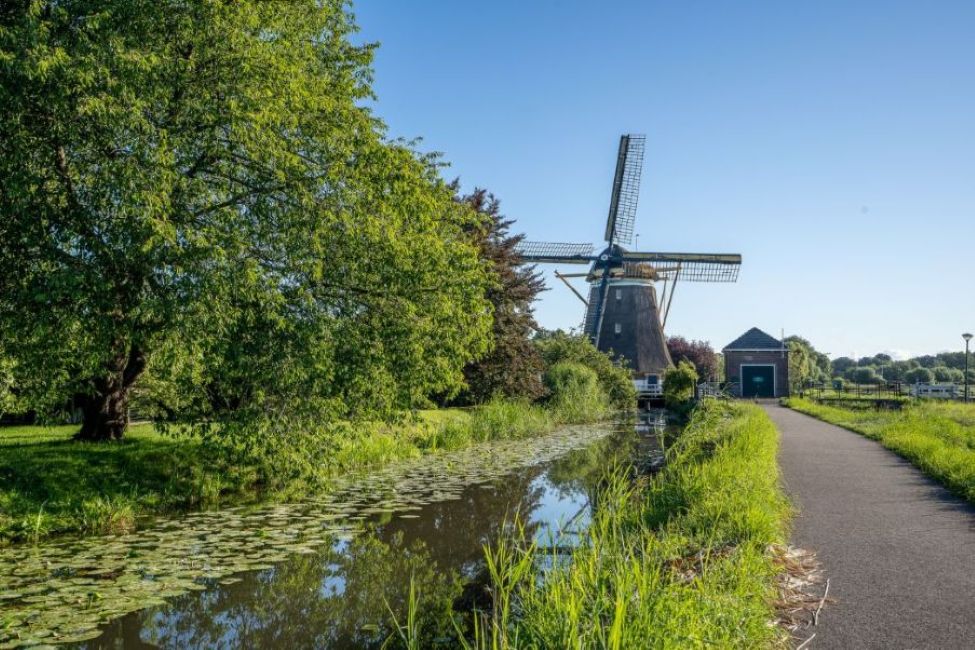
Photo by wirestock
The later stages of life have unique challenges for everyone, but for immigrants, growing older typically carries an especially somber weight. You see, the experience of aging gracefully in migration involves not only the physical distance of being away from where one is born but also navigating the emotional distance from being away from one’s homeland.
For Maya Butalid, this process of getting in on years has been woven into a life of activism, integration, and profound self-discovery, as detailed in her memoir, Chasing Windmills.

Photo by Maya Butalid
The transition into advanced age far from your birthplace is not just about the number of years that have passed but about how you let those years shape your identity in a place that is both home and not quite home.
Butalid’s story offers a powerful look at the immigrant experience of aging, showing that the golden years can still be a time of continued growth and new purpose, even when you feel like you belong to two different worlds.
The Long Road to Belonging
The immigrant experience is rarely a straightforward path, and this is especially true for those who, like Maya Butalid, arrive with a specific mission.
Butalid came to the Netherlands in 1983 as a political activist to gather support for the fight against the Marcos dictatorship in the Philippines.
This meant that for the first ten years, her life was not about putting down roots but about working for a cause. Therefore, she did not have the time to really think about her place in a country that was altogether not her own (yet), with her identity firmly tied to being a Filipino activist abroad.
Maya only began finding her place within Dutch society in earnest after she had already left the revolutionary movement in 1993, which was a decade after her initial arrival in the Netherlands and many years after the Marcos dictatorship had already been toppled. It was then that she started working to truly make her new home her own. This was a process that required her to find herself again: to learn a new language, to build a career, and to apply the values that had first brought her there.
While she had spent her first years as an activist, those years had not been wasted. Instead, they became the foundation upon which she built her understanding of social justice and her new community, which she then applied to her new life to thrive and grow in a home far away from home.
Building a New Identity Piece by Piece
One of the most profound aspects of growing older in a foreign country is the constant renegotiation of one’s identity. You are not simply who you were before you left, nor do you become a copy of the people in your new country.
Instead, you become a blend of both. You have to become a blend of both.
For Maya Butalid, this was not a passive process but a conscious one, describing her life as a “circle of creating and re-creating my identities,” moving from being a political activist to a migrant, then a member of the broader migrant community, and eventually an integrated citizen involved in Dutch politics. At the same time, she never severed her connection to her roots, eventually finding the time to help communities in Mindanao.
This dual engagement allowed her to feel “at home” in the Philippines while also being “adapted to living” in the Netherlands.
For many older immigrants, this sense of having a foot in two worlds is a core experience. It means that the later stages of life involve a delicate balance: participating fully in one’s host society while keeping the cultural heritage and family ties of one’s home country alive.
The Golden Years of Reflection
Butalid’s journey shows that the golden years can be a time of re-engagement rather than withdrawal. Even after facing a serious challenge like a breast cancer diagnosis, she did not retreat from life and used the confrontation with her own mortality to focus on what mattered most.
This was the initial impetus for her writing Chasing Windmills: as a way to document her life and reflect on the “windmills,” or challenges, she had faced, and, in turn, pass her life experience on to her granddaughters. Despite getting in on years, she also picked up old hobbies like playing the piano and returned to long-distance walking, activities that provided a sense of peace and meditation.
This is a powerful example of how getting in on years can be a period of deep personal discovery and spiritual growth.
The Golden Years, for Butalid, have been about continuing her lifelong commitment to service, including supporting refugees through her work and helping with development in the Philippines.
Aging gracefully in migration often means finding new ways to channel the energy and passions of one’s youth into meaningful contributions to both one’s adopted and native homes.
Photo by Barbara Hartmann Fara
The Heart of an Immigrant’s Journey
The transition into advanced age as an immigrant is a story about building a life between two worlds and bridging the gap between them.
Maya Butalid’s experiences demonstrate that the challenges of migration are not left behind in youth but continue to evolve and shape one’s identity in later life.
The strength required to build a new life in a foreign land often makes immigrants more resilient and resourceful as they age.
Her story is a testament to the weight of purpose, maintaining connections across cultures, and embracing the constant evolution of life and who you are. Maya wouldn’t have been where she was if she hadn’t.
While the journey can be complex, it shows that home is not always a single place but a feeling of belonging you carry with you.
Looking to chase some windmills of your own? Get Maya Butalid’s Chasing Windmills and her follow-up on the women she met along the way, Heart of a Mother, to find inspiration for your own journey.
Grab them online here at her personal website or at your favorite bookstore!