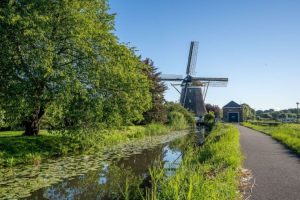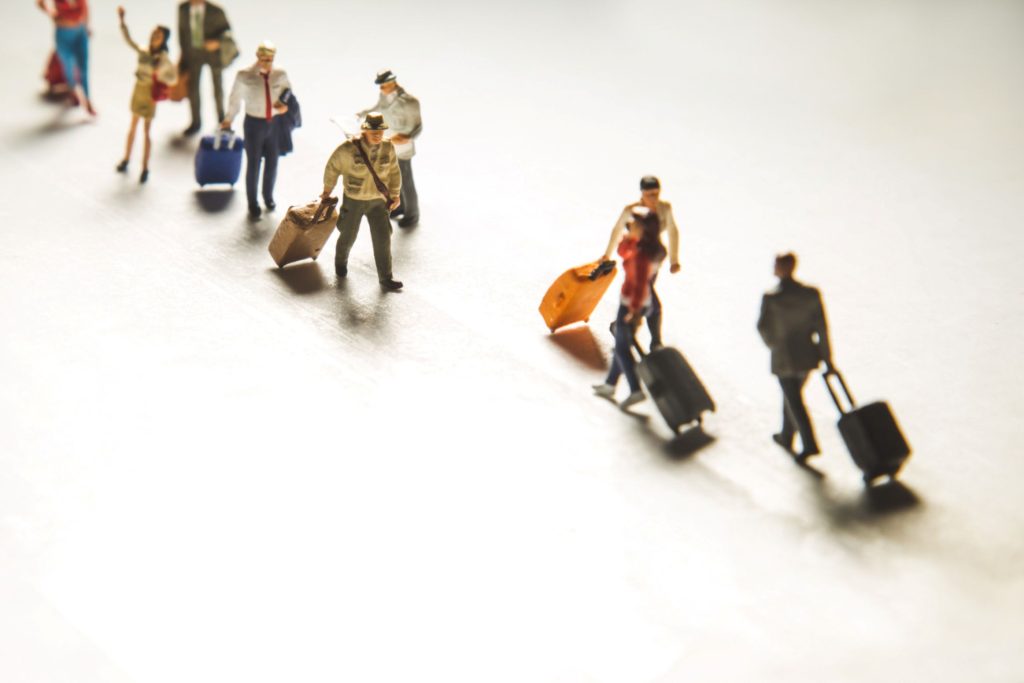
Photo by jcomp
Living away from the place where one grows up and experiencing the first glimpses of life changes people in a way that those who never left would find hard to understand. In this way, what home is and could mean shifts, often becoming too distant and cryptic. The emotional meaning of home abroad, thus, becomes something one carries inside, ever flowing, and not something altogether anchored in a physical space.
Maya Butalid’s journey, as she recounts it in Chasing Windmills, shows this truth clearly.
After moving from the Philippines to the Netherlands in the 80s, she gradually discovered that home is in the heart and, while having first sprouted from somewhere specific, does not have to continue that way.
Understanding this truth was slow, mired as she was in having to adapt to a new country while fighting to keep her Filipino roots alive.
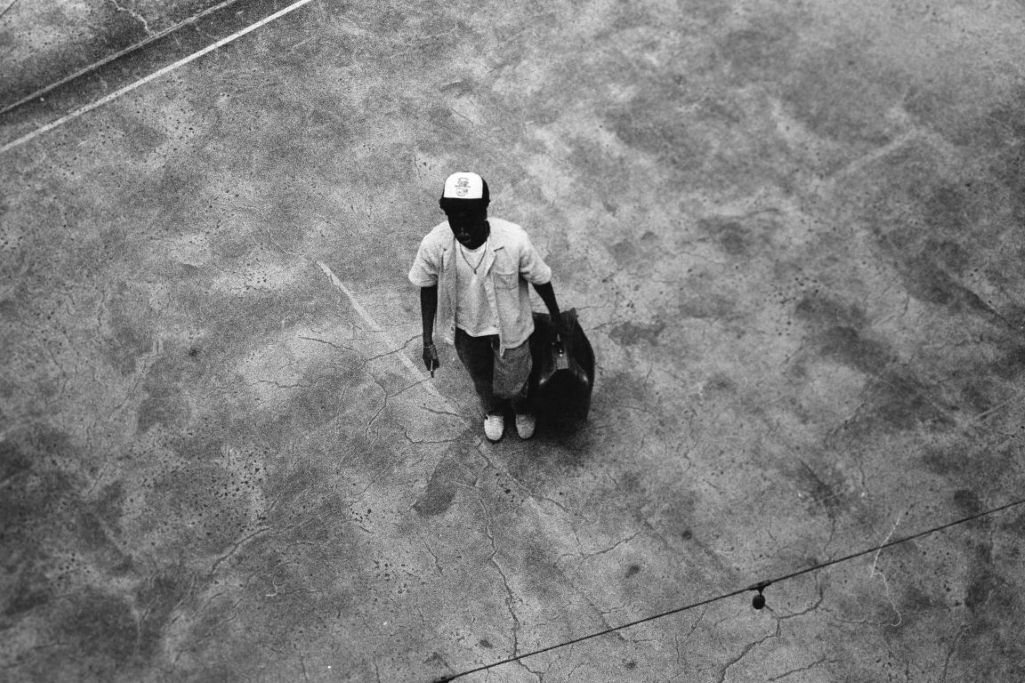
Photo by Chris Harvey
A Universal Experience Abroad
The idea of having to transform the emotional meaning of home abroad is not a rare experience. Many, if not all, immigrants experience this turn in understanding. The house where you grew up may still stand (even after many years and many miles away), but who you were when you left that place is no longer the same person who first left. Now, you may have learned to speak in another tongue at home with your children, never inheriting your mother’s language. You work at a new rhythm that’s completely different than the one you once grew accustomed to. Now, the sky you wake up to is changed.
Yet, something deep inside remains connected to somewhere else, to a place beyond the horizon, to a place you once called home. This feeling may grow stronger or fade, but it’s still there.
The emotional meaning of home abroad has now become a constant push-and-pull between two worlds that can both meaningfully claim you and have both contributed to your identity as it is now.
For Maya herself, this meant learning to see herself as both Filipino and Dutch. A realization spurred on by her daughters’ questions about their own identities. Seeing her daughters asking the same questions she had been asking herself forced her to grapple with what it truly meant to belong and to be at home.
She realized that, for her, home was not tied to a passport or any piece of land. Home was the love and the deep connection she carried with her wherever she went.
If she could still love and feel connected, then, wherever she was, she was at home.
The Adaptability of One’s Roots to Grow
Oftentimes, we keep to the idea that as the roots of a plant cannot be moved, so too must ours. This is seldom the case. When you have learned to live beyond where you once grew up and thrived, what once seemed utterly fixed becomes fluid.
In Chasing Windmills, Maya admits to feeling quite at home in Tilburg, as if she had been there all her life. Yet, the moment she steps back into the Philippines, everything feels natural and effortless, as if she never left at all. This sense of belonging to two “worlds” is common among many migrants and immigrants. The feeling of being home when visiting either place does not diminish, even after decades pass.
The roots don’t disappear, as some may think, but simply learn to grow in new directions. Just as the roots of a tree spread far and wide, reaching far into foreign soil, so too do ours.
An identity, just as a person is, is a living thing, growing and changing as our bodies do and the seasons shift.
Everyone Wants to Belong with Others Somewhere
As was mentioned earlier, a major part of Maya’s story was watching her children navigate their own questions about identity. Despite having been in the Netherlands and having been taught by her mother about her roots, her daughter Ligaya was still confused about her identity, unable to reconcile her Filipino and Dutch roots. At age three, she asked Maya where she truly belonged. Maya’s answer, of course, was one that revealed many years of asking the same question: Ligaya was both and lucky to be both.
Across the globe, it is the children of immigrants who are most often faced with the unique challenges of identity and belonging. This is often compounded by the reality that they may look different from their peers, eat different food at home, be aware that their family’s customs might seem strange to those outside of it, and that there are people out there who don’t believe they belong anywhere. In the book, Maya has a candid conversation with her youngest daughter, Elena, about how the latter felt like a Dutch person imprisoned in a Filipino body.
While the parents themselves may have accepted the liquid properties of their identity, their children most often do not, with some foregoing the other half altogether and choosing the identity that draws them closest, which is almost always that of the land they were born in.
This is what makes the emotional meaning of home abroad almost indefinable. At the end, what matters is what you do with it.

Photo by bearfotos
To Be at Home Wherever the Heart Is
The journey of creating a new life in another country while maintaining ties to your homeland should never be about choosing one over the other. Maya shows that it’s possible to fully participate in a new society while keeping your original culture alive: becoming a city councilor in Tilburg, serving on commissions, and contributing to local policy.
Yet she also remained active in Filipino organizations, attended Filipino masses, and supported development work in the Philippines.
The carrying comfort that comes from knowing you belong in two places is a gift that many migrants eventually discover. This comfort does not come easily and requires effort, patience, and a willingness to embrace complexity.
Maya Butalid’s journey teaches us that home is not a fixed point but a living thing that grows and changes with us. The home is in the heart because the heart has room for many connections.
Explore more stories of courage and belonging in The Heart of a Mother and Chasing Windmills to discover how one woman chased her dreams across continents.