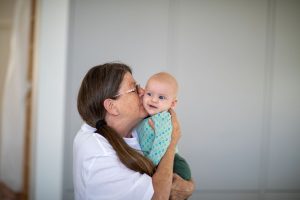
Photo by Maya Butalid
Maya Butalid’s memoir about being an activist, a woman, and a mother shows that raising children does not mean giving up the fight for justice. Under their own vine and fig tree, she found a way to keep her ideals alive while raising two daughters in the Netherlands.
Her vision for herself, her family, and the world meant living in peace and security, enjoying the fruits of your labor, having a place to call your own, finding rest in your own home, and safety and independence for her family.
Although the universal application of her ideals has yet to manifest, Maya shows that these things are possible even for a woman who never stopped chasing her windmills.
Many people think activism is for young, single people without family responsibilities. Maya proves this wrong, having worked for the Philippine revolutionary movement, becoming a Dutch city councillor, and helping poor communities in the Philippines—all while being a mother.
Her story teaches that motherhood and political participation do not have to be enemies. With support and clear values, a woman can do both well.

Photo by freepik
From Underground Activist to Mother in a New Country
Maya joined the underground movement against the Marcos dictatorship in 1977, going full-time in 1980 and marrying Carlo, with whom she had been since almost forever.
When the movement sent them to the Netherlands in 1983, Maya found herself pregnant. She gave birth to her first daughter, Ligaya, in 1984 and her second daughter, Elena, in 1989.
Life in a new country was hard, unable to speak Dutch well at first, and unfamiliar with the customs and the people.
But she never stopped her political work.
Her activism did not stop when her children were born, continuing to organize support for the Philippines while caring for a baby.
“When we arranged a transfer at a train station, Carlo came home from a trip, and I needed to leave right away. Ligaya transferred from my arms to his, and I quickly boarded my train,” she writes.
She and Carlo worked as a team, sharing parenting so both could stay active in their work for justice.
Raising Children While Staying True to Her Ideals
Although they had been born a continent away, Maya wanted her daughters to know their Filipino roots. So, she spoke Cebuano at home, but she also let them acclimate to being Dutch.
When Ligaya asked if she was Filipino or Dutch, Maya said she was both. “Oh, how nice! I am ‘two’!” Ligaya replied. Maya taught her children values like pakikiramdam—sensitivity to others.
This came from her Filipino culture. But she also let them learn Dutch independence.
She did not force her children to follow her political path. Instead, she showed them how to think for themselves.
When Elena announced she would be an officer of her student rowing association and delay her studies, Maya said she needed to think about it. But Elena only replied, “Ma’am, I am not asking your permission. This is an announcement.”
Maya laughed and accepted this, relieved that she had raised strong, independent daughters who made their own choices.
Becoming a City Councillor While Working Full-Time
In 2003, Maya became a city councillor in Tilburg, serving until 2010. This was not a symbolic position: she was the party’s spokesperson on poverty, employment, and social welfare. During her time as a councillor, she read hundreds of pages of budget proposals every week and attended meetings three or four nights a week. She did all this while keeping her regular job at the Council for Refugees.
Her family supported her with Carlo taking on more household tasks. Her daughters respected her work: Ligaya once told her, “You are very busy, but you are always there at the important moments. You always take me seriously.”
Maya writes, “I could not wish for a better compliment.”
She did not feel guilty about working full-time, for her mother had worked too. For Maya, a mother working was completely normal.
Finding Rest in Her Own Home While Chasing Windmills
Maya did not burn out because she had a strong home base: Carlo was her partner in every way, cooking, caring for the children, and supporting her career. He was always in the rafters, watching over her and being a quiet guardian angel.
When Maya felt insecure in her new job, Carlo was there, and when she wanted to finish her Master’s thesis after eleven years, he encouraged her. With their love and trust for each other, home was a place of safety and independence for the whole family.
She also found rest in the simple things. Playing the piano became a form of meditation while long-distance walking allowed her to reflect on life. Sometimes, she walked the Pieterpad and the Night of the Refugee. These walks gave her time to think without pressure. “It allowed me to hear my thoughts loud and clear,” she writes. “It was like I was conversing with my soul.” This balance between action and rest kept her going for decades.

Photo by jcomp
A Legacy of Love, Justice, and Family
Maya’s daughters are now mothers themselves: Ligaya and Elena both work full-time and raise their own children, as Maya babysits her grandchildren regularly, singing the Internationale to put them to sleep and often playing make-believe with them about traveling to the Philippines.
She has not lost her ideals, but she has passed them on gently.
Her memoir about being an activist, a woman, and a mother ends with a simple truth: “Where there is friendship and peace. Where there is love. God is there.”
For Maya, living under one’s own vine and fig tree means fighting for justice while raising a loving family, enjoying the fruits of your labor without losing yourself, and finding rest in your own home even as you chase windmills.
Discover more of Maya Butalid’s inspiring journey. Buy Chasing Windmills and learn how one woman balanced motherhood, activism, and politics under her own vine and fig tree.