


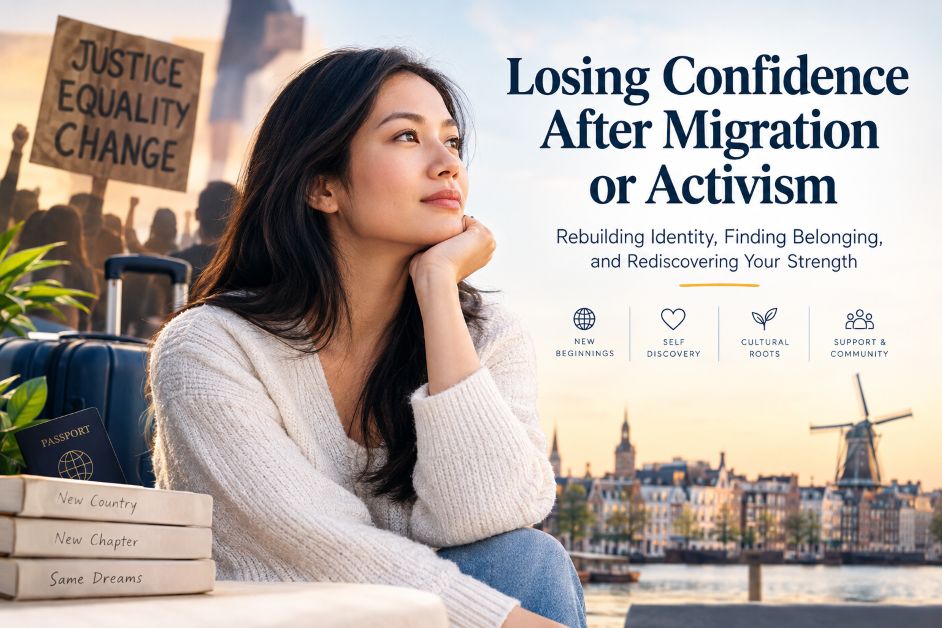
Moving to another country or stepping away from an activist movement can change how you see yourself. You may have once felt capable, connected, and certain of your purpose, only to find yourself questioning your decisions, abilities, and place in the world. Losing Confidence After Migration or Activism is an experience that can emerge when familiar relationships, responsibilities, and sources of meaning suddenly change.
For some people, migration brings new opportunities alongside loneliness and cultural adjustment. For others, leaving activism creates an unexpected emptiness after years of working toward a shared cause. Both experiences can challenge your identity, self-esteem, and sense of belonging.
The good news is that losing confidence does not mean losing your worth. By understanding these changes, reconnecting with your values, and taking small steps toward a new purpose, you can begin rebuilding self-trust while honoring the experiences that shaped you.
What Does Losing Confidence After Migration or Activism Mean?
Losing confidence after migration or leaving a movement involves more than feeling uncertain. It can mean questioning your abilities, struggling to recognize yourself, or feeling disconnected from the person you were before a major life transition.
Identity, self-esteem, and self-confidence are closely related but different. Identity concerns how you understand yourself and your place in the world. Self-esteem reflects how you evaluate your worth, while self-confidence concerns your belief in your ability to handle particular situations.
Experiencing identity loss after migration does not necessarily mean that your cultural roots have disappeared. Instead, unfamiliar expectations and changing relationships may make it harder to express who you are.
Similarly, the loss of identity after activism can occur when a movement, organization, or community has been central to your daily life. Without that role, you may wonder what gives your life direction.
These experiences are part of the broader challenges associated with life transitions, emotional adjustment, and changing social identities. They deserve patience rather than self-criticism.
Why Moving Abroad Affects Self-Esteem and Identity
Understanding why moving abroad affects self-esteem can help explain why someone who once felt confident may struggle in a new environment.
Language Barriers and Cultural Adaptation
When you cannot express yourself comfortably, ordinary conversations may become stressful. You might hesitate to share opinions, participate in discussions, or pursue professional opportunities.
Cultural adaptation also requires learning unfamiliar social expectations. Humor, communication styles, workplace behavior, and friendship patterns may differ from what you know.
Over time, these challenges can contribute to acculturative stress, especially when you feel pressured to adapt while maintaining your cultural identity.
Homesickness, Isolation, and Starting Over
Leaving familiar surroundings can mean losing the everyday support of friends, relatives, and neighbors. Even when you remain connected online, distance can change the nature of relationships.
Coping with loneliness after immigration often begins with acknowledging that building a new social network takes time. Joining community activities, maintaining meaningful family relationships, and developing local friendships can gradually restore a sense of security.
If you are wondering how to feel at home in a new country, remember that home does not have to be defined by one location. It can develop through familiar routines, meaningful relationships, cultural traditions, and places where you feel accepted.
Professional Changes and Self-Doubt
Migration may also involve qualifications that are not recognized, interrupted careers, or unfamiliar workplace expectations. When previous achievements no longer receive the same recognition, it can become difficult to trust your abilities.
However, starting over does not erase your experience. Your knowledge, persistence, problem-solving skills, and relationships remain valuable even when you need time to demonstrate them in a new environment.
Why Leaving Activism Can Affect Confidence and Purpose
Activism can provide more than a cause to support. It can offer friendship, responsibility, community recognition, and a strong sense of collective purpose.
When you step away because of burnout, changing beliefs, family responsibilities, safety concerns, or personal circumstances, you may experience uncertainty about your future.
Finding Purpose After Leaving a Social Movement
Finding purpose after leaving activism may require rethinking how you want to contribute to the world. You might miss working toward a shared goal or feel disconnected from people who once understood your priorities.
The experience of life after activism reinvention involves recognizing that your values can continue even when your role changes. Compassion, justice, dignity, and solidarity can find expression in mentoring, education, community service, family relationships, and everyday decisions.
Managing Guilt and Changing Values
Some people worry that stepping back means betraying their beliefs. Others feel disappointed when a movement no longer reflects their expectations.
Changing your involvement does not automatically invalidate your previous contributions. You can acknowledge what you learned, reflect honestly on your experiences, and decide how to live your values in the present.
Community solidarity does not always require a public role or constant participation. Sometimes it begins with supporting someone who needs help, listening carefully, or contributing in ways that fit your current circumstances.
How to Rebuild Confidence After a Major Life Change
Learning how to regain confidence after moving abroad or leaving activism begins with realistic expectations. Confidence usually grows through repeated experiences of competence, connection, and self-trust rather than one dramatic breakthrough.
1. Acknowledge What Has Changed
Give yourself permission to recognize what you miss. You may be grieving familiar relationships, professional recognition, cultural routines, or the purpose associated with a former role.
Naming these changes can make your emotions easier to understand. You do not have to dismiss sadness to appreciate new opportunities.
2. Separate Your Worth From Your Circumstances
Your current position does not define your entire identity. A career interruption does not erase professional experience, and leaving an organization does not erase the values that motivated your involvement.
Write down skills, achievements, relationships, and personal qualities that remain important to you. This simple practice can help counter the tendency to judge yourself only by what has changed.
3. Reconnect With Your Cultural Identity
Reconnecting with cultural identity abroad can provide continuity during uncertain times. Cook familiar meals, speak your first language, celebrate meaningful traditions, or participate in cultural gatherings.
These practices can support cultural heritage, strengthen relationships, and remind you that adapting to a new environment does not require rejecting your past.
4. Build New Connections Gradually
If you are rebuilding identity after migration, look for opportunities to meet people through shared interests rather than feeling pressured to fit in everywhere.
Consider volunteering, joining a local association, learning a skill, or participating in a community activity. Small interactions can gradually develop into meaningful friendships.
5. Set Achievable Goals
Choose manageable actions that help you regain a sense of agency. You might practice a language, complete a project, reconnect with someone you trust, or explore a new professional opportunity.
Each completed step provides evidence that you can influence your circumstances. This is an important part of rebuilding self-confidence after a major life change.
6. Redefine Your Purpose
You do not have to return to your previous identity to live meaningfully. Consider what matters to you now, which responsibilities feel sustainable, and how your experience might help others.
Personal reinvention does not require abandoning everything you once believed. It allows you to carry valuable lessons forward while making room for change.
If uncertainty continues to interfere with your daily life, relationships, or wellbeing, consider speaking with a qualified mental-health professional or a culturally responsive counselor.
How Family Stories and Cultural Heritage Can Restore Belonging
A person’s identity is shaped not only by individual experiences but also by relationships, memories, and the stories passed between generations.
Storytelling across generations can help people understand migration, family sacrifices, cultural change, and the decisions that shaped their lives. Listening to older relatives may reveal that uncertainty and reinvention have appeared in earlier generations, too.
For Overseas Filipinos in the Netherlands, for example, maintaining connections with family, language, traditions, and Filipino community networks may provide continuity while adapting to life abroad. Individual experiences will differ, but cultural connection can offer a meaningful source of belonging.
Family narratives can also illuminate intergenerational wisdom, family stories preserving heritage, and the emotional meaning of home abroad. These connections help people recognize that identity can evolve without losing its foundations.
Experiences of caregiving and family change can contribute to this understanding as well. The emotional labor of motherhood, motherhood and letting go, and the unconditional love of mothers in challenging times may shape how families navigate separation, sacrifice, and changing responsibilities.
Likewise, grandmotherhood and legacy can represent the transmission of values, memories, and practical wisdom between generations. These themes can be explored through family conversations, personal writing, photographs, and shared traditions.
For those interested in Filipino history, examining the legacy of the underground movement in modern Philippines can provide historical context for how collective struggles, social change, and personal convictions influence identity. Such histories should be approached thoughtfully, with reliable sources and attention to the differences between individual experiences.
Finding Belonging Without Losing Yourself
A common fear after migration is that fitting into a new environment requires giving up parts of your identity. Yet belonging does not have to involve choosing between your past and your present.
You can learn new customs while preserving your traditions. You can form friendships outside your cultural community while maintaining important connections within it. You can leave an activist role while continuing to support the principles that matter to you.
Finding belonging after moving abroad involves discovering where you can participate authentically, rather than trying to satisfy every expectation.
For some people, personal transformation through adversity comes from recognizing strengths they did not previously notice. For others, it develops through relationships, family responsibilities, creative work, or quiet acts of service.
The goal is not to recreate your former life exactly. It is to develop a sense of self that reflects both your experiences and the person you are becoming.
Frequently Asked Questions
Why do I feel less confident after moving abroad?
Unfamiliar social expectations, language barriers, professional changes, and separation from familiar support networks can affect confidence. Give yourself time to adjust, build connections, and recognize the abilities you continue to bring to your new environment.
Can migration change my identity?
Yes. Migration can influence how you express your culture, relationships, values, and sense of belonging. However, adapting to a new country does not require abandoning your heritage or losing the parts of yourself that remain meaningful.
Why do I feel lost after leaving activism?
Activism may have provided purpose, community, responsibility, and a clear sense of direction. Leaving can create an emotional gap. Reflecting on your values and finding sustainable ways to express them can help you develop a new sense of purpose.
How long does it take to regain confidence?
There is no universal timeline. Confidence may return gradually as you develop supportive relationships, achieve manageable goals, and become more comfortable with changing circumstances. Persistent or worsening distress may warrant professional support.
How can I stay connected to my culture while adapting to a new country?
Maintain meaningful traditions, speak your language, connect with family, participate in cultural communities, and share your heritage with younger generations. You can embrace new experiences while preserving important cultural connections.
Rebuilding Confidence While Honoring Who You Are
Losing Confidence After Migration or Activism can be painful because major life transitions often change the relationships, responsibilities, and communities that once helped define you. Yet uncertainty does not mean you have lost your abilities, values, or potential.
By acknowledging what has changed, reconnecting with your cultural roots, building supportive relationships, and setting achievable goals, you can gradually restore self-trust and discover new sources of meaning.
Your identity is not limited to one country, one community, one career, or one chapter of your life. It can grow through experience while remaining connected to the people, values, and memories that matter most.
What has helped you rebuild confidence or find belonging after a major life change? Share your experience in the comments, or pass this article along to someone who may need encouragement as they navigate a new beginning.


