


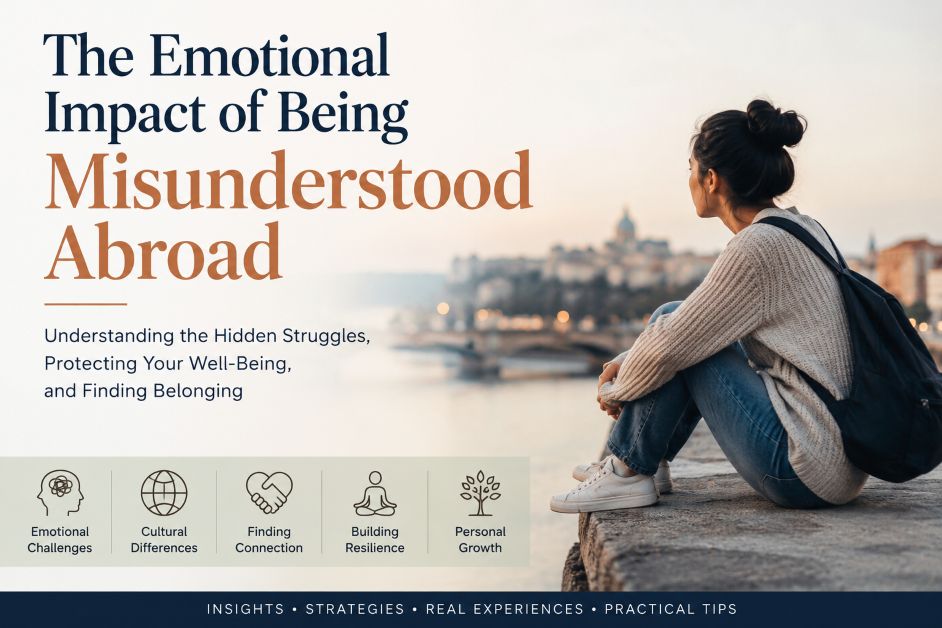
Moving to another country often brings excitement, hope, and the promise of new opportunities. Yet beneath the adventure lies a quieter struggle that many people never anticipate: the emotional impact of being misunderstood abroad. Whether it stems from language differences, unfamiliar customs, or cultural expectations, feeling misunderstood can slowly erode confidence and create a profound sense of isolation.
Many people assume that misunderstandings are simply part of adjusting to a new environment. While this is true to some extent, repeated experiences of not being understood—or of feeling that your intentions, personality, or values are misinterpreted—can leave lasting emotional scars. Over time, these moments may influence how you see yourself, how you connect with others, and even how you define home.
For immigrants, expatriates, international students, and long-term travelers, these emotional experiences often extend beyond communication. They become questions of identity, belonging, and resilience. The journey of adapting to a new culture is rarely just about learning a language; it is about learning how to remain authentic while navigating unfamiliar social norms.
This article explores the emotional impact of being misunderstood abroad, why it affects people so deeply, and practical ways to overcome these challenges. You’ll also discover how emotional resilience abroad, cross-cultural communication, and meaningful relationships can help transform difficult experiences into opportunities for growth and self-discovery.
What Does It Mean to Feel Misunderstood Abroad?
Feeling misunderstood abroad is more than occasionally struggling to communicate. It is the persistent feeling that your words, actions, emotions, or intentions are interpreted differently than you intended. This experience can occur even when you speak the local language fluently because misunderstandings often arise from cultural expectations rather than vocabulary alone.
For many people experiencing living abroad emotions, the challenge is not simply expressing themselves but feeling truly heard. A casual conversation may become awkward because humor doesn’t translate. A gesture considered polite in one culture may be viewed differently in another. Over time, these experiences contribute to emotional challenges abroad that can affect both personal and professional relationships.
Communication vs. Emotional Connection
Communication involves exchanging information, while emotional connection requires mutual understanding and empathy. You may successfully explain your thoughts, yet still feel emotionally disconnected because others interpret your behavior through a different cultural lens.
For example:
- A quiet personality may be mistaken for disinterest.
- Direct communication may appear rude in some cultures.
- Indirect communication may be misunderstood as uncertainty.
- Expressions of emotion may be interpreted differently depending on cultural norms.
These differences highlight why cross-cultural communication involves much more than language proficiency. It requires understanding values, expectations, and unspoken social rules that shape everyday interactions.
Why Small Misunderstandings Feel So Personal
At first glance, correcting a misunderstanding might seem like a minor inconvenience. However, repeated experiences can gradually influence your emotional well-being.
Imagine introducing yourself repeatedly, only to have your name mispronounced despite multiple corrections. Or sharing your experiences only to realize your meaning has been lost. Individually, these incidents may seem insignificant. Collectively, they can create emotional isolation, diminish self-confidence, and reinforce feelings of being an outsider.
For many people, this contributes to emotional adjustment abroad, where adapting to a foreign environment involves not only practical changes but also emotional adaptation. Feeling misunderstood repeatedly may cause someone to question whether they truly belong.
Why Being Misunderstood Abroad Has Such a Deep Emotional Impact
Humans naturally seek acceptance, connection, and belonging. These needs remain constant regardless of where we live. When these needs are challenged by repeated misunderstandings, the emotional consequences can be significant.
Research in migration psychology consistently shows that successful adaptation depends not only on learning new customs but also on maintaining meaningful social connections. When these connections are difficult to establish, individuals may experience increased stress, loneliness, and uncertainty.
This explains why the emotional impact of living abroad often extends beyond homesickness. Feeling misunderstood can influence emotional health, relationships, and personal identity.
Loss of Familiar Social Cues
Every culture develops its own unwritten rules about conversation, humor, eye contact, body language, and social etiquette. After moving abroad, these familiar cues often disappear.
Suddenly:
- Conversations require more mental effort.
- Humor may not translate.
- Facial expressions may carry different meanings.
- Everyday interactions become less predictable.
This constant adjustment contributes to culture shock, making ordinary situations emotionally exhausting.
The Emotional Weight of Cultural Differences
Many newcomers underestimate how deeply cultural misunderstanding affects emotional well-being.
Differences in communication styles may lead others to misunderstand confidence as arrogance or politeness as weakness. These situations can leave individuals feeling frustrated because they know who they are but struggle to communicate that identity effectively.
Such experiences are common during adapting to a new culture, where even simple interactions require ongoing learning and flexibility.
The Need to Feel Seen and Understood
One of the most fundamental human needs is to feel recognized for who we truly are. When that recognition is missing, emotional pain often follows.
Feeling understood helps create:
- Trust
- Belonging
- Psychological safety
- Strong relationships
- Self-confidence
Conversely, repeated misunderstandings can weaken these foundations and contribute to migration emotional health challenges that extend beyond the initial relocation period.
Common Reasons People Feel Misunderstood in Another Country
Understanding why misunderstandings occur is the first step toward addressing them. While every person’s experience is unique, several common factors contribute to these situations.
Language Barriers Beyond Vocabulary
Many people believe fluency alone eliminates communication problems. In reality, even advanced language learners encounter subtle misunderstandings.
Idioms, humor, sarcasm, regional expressions, and tone often carry meanings that cannot be translated directly. As a result, someone may still feel misunderstood in another country despite speaking confidently.
This illustrates why communication barriers are not simply linguistic—they are cultural as well.
Different Cultural Expectations
Every society develops expectations about politeness, punctuality, relationships, and emotional expression.
For example:
- Some cultures encourage direct feedback.
- Others prioritize harmony over honesty.
- Some value independence.
- Others emphasize collective responsibility.
When these expectations differ, misunderstandings naturally arise, affecting both personal and professional relationships.
Recognizing these differences is an essential part of adapting emotionally to a foreign country and developing greater cultural intelligence.
Body Language and Nonverbal Communication
Nonverbal communication varies significantly across cultures.
Examples include:
- Eye contact
- Personal space
- Hand gestures
- Smiling
- Physical touch
A gesture intended as friendly in one country may appear inappropriate in another. These differences often create confusion even when spoken communication is clear.
Developing awareness of nonverbal customs strengthens cross-cultural communication and helps reduce unnecessary misunderstandings.
Stereotypes and Assumptions
Another common source of misunderstanding involves stereotypes.
People may unintentionally make assumptions based on nationality, accent, ethnicity, or cultural background. These assumptions can prevent genuine understanding and make individuals feel defined by labels rather than their unique personalities.
Such experiences contribute to the emotional effects of migration, particularly when individuals feel they must constantly explain or defend who they are.
Different Communication Styles
Communication styles differ widely across cultures.
Some people prefer:
- Direct conversations
- Immediate feedback
- Open disagreement
Others value:
- Indirect communication
- Careful wording
- Reading between the lines
- Avoiding confrontation
Neither approach is inherently better, but recognizing these differences helps reduce conflict and supports overcoming loneliness abroad by fostering stronger relationships built on empathy and mutual respect.
The Hidden Psychological Effects of Being Misunderstood Abroad
While occasional misunderstandings are a natural part of adapting to life in another country, repeated experiences can have lasting emotional consequences. Over time, these moments accumulate, influencing how people think, feel, and interact with the world around them. The emotional impact of being misunderstood abroad often extends far beyond awkward conversations—it can shape mental well-being, relationships, and one’s sense of identity.
Psychologists studying migration and cultural adaptation have found that belonging is a fundamental human need. When people consistently feel excluded or misunderstood, they are more likely to experience emotional distress. These challenges are not signs of weakness but understandable responses to navigating unfamiliar environments while trying to maintain a sense of self.
Understanding these hidden effects is an important step toward protecting your migration emotional health and recognizing that many others share similar experiences.
Loneliness
One of the most common consequences of feeling isolated in another country is loneliness.
Loneliness is not simply being alone; it is the emotional experience of lacking meaningful connection. You may live in a busy city, work with many colleagues, or attend social events regularly, yet still feel disconnected because few people truly understand your experiences.
This type of loneliness often develops gradually. Small misunderstandings can discourage people from joining conversations or participating in community activities. Eventually, some begin limiting social interactions altogether.
If you’ve ever wondered why do I feel misunderstood abroad, loneliness is often part of the answer. Without genuine understanding, meaningful relationships become harder to build.
Fortunately, loneliness does not have to become permanent. Developing social belonging, participating in community activities, and creating authentic friendships can gradually reduce emotional isolation.
Anxiety
Repeated misunderstandings can also increase anxiety.
People may begin overthinking every conversation, worrying whether they have said the wrong thing or unintentionally offended someone. Everyday situations that once felt routine can become emotionally draining.
This anxiety often appears in situations such as:
- Speaking during meetings
- Ordering food
- Visiting government offices
- Attending social gatherings
- Meeting new people
Over time, these concerns may cause individuals to avoid situations that require communication, making adapting to a new culture even more difficult.
Learning local customs and improving cross-cultural communication skills can reduce uncertainty while increasing confidence.
Emotional Fatigue
Living abroad requires continuous learning.
Everyday decisions—from understanding transportation systems to interpreting social expectations—require mental energy.
When misunderstandings occur repeatedly, this constant adjustment can result in emotional fatigue.
Signs include:
- Feeling mentally exhausted after conversations
- Losing motivation to socialize
- Becoming emotionally overwhelmed by simple interactions
- Feeling disconnected from both your home and host cultures
These experiences are common during emotional adjustment abroad and should not be mistaken for personal failure.
Taking time to rest, reflect, and reconnect with supportive communities can help restore emotional balance.
Loss of Confidence
Confidence grows when we feel understood.
Conversely, repeated misunderstandings may slowly weaken self-confidence.
Someone who was once outgoing may become quiet. A confident professional may begin questioning their abilities simply because their communication style differs from local expectations.
This gradual decline can affect:
- Career development
- Friendships
- Academic performance
- Public speaking
- Leadership opportunities
Many immigrants and expatriates experience rebuilding confidence after moving abroad as one of the most important stages of cultural adaptation.
Recognizing that confidence is influenced by environment—not just personality—is an essential step toward recovery.
Social Withdrawal
As misunderstandings continue, some people begin avoiding social situations altogether.
Rather than risk embarrassment, they may choose isolation.
Unfortunately, this creates a cycle:
- Misunderstandings occur.
- Confidence decreases.
- Social activities become less frequent.
- Opportunities to build relationships decline.
- Loneliness increases.
Breaking this cycle requires intentional effort and patience.
Building friendships with both locals and fellow international residents can strengthen emotional resilience abroad while creating opportunities for genuine understanding.
Impostor Syndrome in a New Culture
Many newcomers experience something similar to impostor syndrome.
They may think:
- “Maybe I don’t belong here.”
- “Everyone else understands except me.”
- “Perhaps I’m not capable enough.”
These thoughts are common during life as an immigrant, especially in unfamiliar professional or academic environments.
Remember that cultural adaptation is a learning process. Struggling with unfamiliar customs does not diminish your abilities, intelligence, or value.
Developing personal growth abroad often begins by accepting that learning takes time.
How Misunderstanding Abroad Can Change Your Identity
One of the least discussed aspects of migration is how misunderstanding influences identity.
Identity is not fixed. It evolves through experiences, relationships, memories, and the communities we belong to. Living between cultures often challenges long-held assumptions about who we are.
The identity abroad journey is rarely straightforward. While it can be deeply rewarding, it also requires emotional flexibility and resilience.
Questioning Who You Are
Repeated misunderstandings may lead people to question parts of themselves they once took for granted.
You may wonder:
- Should I change how I speak?
- Should I hide parts of my culture?
- Should I behave differently to fit in?
These questions often emerge during preserving identity after migration.
Finding a balance between adaptation and authenticity is essential. Growth does not require abandoning your cultural heritage.
Instead, it involves expanding your understanding of yourself while embracing new experiences.
Balancing Two Cultures
Many immigrants eventually discover they belong to two cultures simultaneously.
This experience is sometimes described as living between worlds.
You may celebrate holidays from your country of origin while embracing traditions from your new home. You may think in multiple languages or adopt different communication styles depending on the situation.
This process of identity reconstruction is not about choosing one culture over another—it is about integrating both into a richer, more complete sense of self.
The emotional meaning of home abroad often changes during this journey. Home becomes more than a physical place; it becomes a collection of relationships, memories, values, and experiences carried across borders.
Finding Strength Through Adaptation
Although misunderstanding can be painful, it also creates opportunities for remarkable personal growth.
Many people eventually develop:
- Greater empathy
- Improved communication skills
- Stronger emotional intelligence
- Broader cultural awareness
- Increased resilience
These qualities contribute to lasting emotional well-being and help people navigate increasingly diverse communities.
Adaptation does not erase your past—it builds upon it.
Emotional Challenges in Everyday Life Abroad
The effects of misunderstanding often appear in ordinary situations rather than dramatic moments. Daily interactions can either strengthen confidence or reinforce feelings of exclusion.
Recognizing these patterns helps explain why the emotional struggles of immigrants are often invisible to others.
At Work
Professional environments present unique communication challenges.
Colleagues may interpret directness differently, misunderstand humor, or overlook cultural communication styles.
These situations may affect:
- Team collaboration
- Career advancement
- Leadership opportunities
- Workplace confidence
Learning local workplace expectations while maintaining authenticity helps improve cross-cultural communication and reduces misunderstandings.
In School
International students frequently navigate unfamiliar academic cultures alongside language differences.
Class participation, group projects, and presentations may feel intimidating, especially when communication styles differ.
These experiences contribute to mental health while living overseas, making supportive educational communities especially valuable.
Within Friendships
Friendships often depend on shared understanding.
However, cultural assumptions sometimes create barriers that neither person intends.
Building lasting friendships requires curiosity, patience, and open communication. Asking respectful questions and explaining your own cultural perspective encourages deeper mutual understanding.
This process supports finding belonging abroad while reducing emotional isolation.
Inside Multicultural Families
Families that span cultures often experience unique communication challenges.
Partners may have different expectations regarding traditions, parenting, celebrations, or expressing emotions.
Children growing up between cultures may also navigate questions of identity and belonging.
Open conversations help families appreciate differences while strengthening emotional connections.
These shared experiences often become meaningful examples of storytelling across generations, preserving family history while helping younger generations understand their multicultural heritage.
Maintaining Emotional Well-Being While Living Abroad
Experiencing misunderstandings is an unavoidable part of living in another country, but they do not have to define your journey. Although the emotional impact of being misunderstood abroad can be profound, it is possible to develop healthy coping strategies that strengthen both your confidence and your sense of belonging.
Emotional well-being is not about avoiding challenges; rather, it is about learning how to respond to them with resilience, self-awareness, and compassion. By investing in your emotional health, you can transform difficult experiences into opportunities for personal growth and deeper cross-cultural understanding.
Building Healthy Support Networks
One of the most effective ways to overcome the emotional challenges of relocation is to build meaningful relationships.
Support can come from many places, including:
- Local community organizations
- Cultural associations
- Volunteer groups
- Professional networks
- Faith communities
- Hobby clubs
- Language exchange groups
Having people who genuinely listen and understand your experiences reduces emotional isolation and strengthens your social belonging.
Equally important is maintaining relationships with family and friends back home. Regular conversations can provide reassurance while reminding you that distance does not diminish meaningful connections.
Building these networks is one of the most effective strategies for overcoming loneliness abroad and improving mental health while living overseas.
Practicing Self-Compassion
Many people are far more patient with others than they are with themselves.
When misunderstandings happen repeatedly, it is easy to become self-critical. You may replay conversations, question your decisions, or assume that every awkward interaction reflects a personal failure.
Instead, practice self-compassion by reminding yourself that cultural adaptation takes time.
Healthy habits include:
- Accepting mistakes as part of learning.
- Celebrating small achievements.
- Avoiding unrealistic expectations.
- Recognizing progress rather than perfection.
Self-compassion supports emotional resilience abroad and encourages healthier responses to future challenges.
Seeking Professional Support When Needed
Sometimes emotional struggles become overwhelming.
Persistent anxiety, depression, or prolonged feelings of isolation may benefit from professional guidance.
Speaking with a counselor or therapist who understands migration experiences can provide practical coping strategies while helping individuals process difficult emotions.
Seeking help is not a sign of weakness—it is an investment in long-term emotional well-being and migration emotional health.
Developing Cultural Intelligence
Learning about another culture extends beyond language.
Cultural intelligence involves understanding values, traditions, communication styles, and social expectations.
You can strengthen this skill by:
- Observing local customs respectfully.
- Asking thoughtful questions.
- Reading about local history.
- Participating in cultural celebrations.
- Remaining open to different perspectives.
As cultural understanding grows, communication barriers often become easier to navigate, making everyday interactions more comfortable and rewarding.
The Role of Storytelling in Healing Emotional Isolation
Stories have always helped people make sense of change.
Whether shared around a family table or written in a personal journal, stories preserve experiences that might otherwise be forgotten. For those living far from home, storytelling can become a powerful tool for healing, reflection, and connection.
Many migrants discover that writing about their experiences helps them understand their own emotions while creating bridges with others who have faced similar journeys.
Why Sharing Your Story Builds Connection
When people share authentic experiences, they often discover they are not alone.
Stories create empathy because they reveal emotions that statistics cannot fully explain.
Writing, speaking, or recording personal experiences can help individuals:
- Process difficult memories.
- Celebrate personal growth.
- Reduce feelings of isolation.
- Build stronger relationships.
- Encourage others facing similar challenges.
These shared experiences often become valuable examples of storytelling across generations, allowing families to preserve lessons learned through migration and cultural adaptation.
How Stories Preserve Identity Across Borders
Migration changes where we live, but it does not erase where we come from.
Family stories, traditions, photographs, recipes, languages, and memories all contribute to preserving identity.
For many people, the emotional meaning of home abroad evolves over time. Home is no longer defined solely by geography. Instead, it becomes a combination of people, memories, values, and experiences carried wherever life leads.
Passing these stories to younger family members helps preserve cultural heritage while strengthening family bonds.
The process also reinforces preserving identity after migration, ensuring that future generations understand the journeys that shaped their family’s history.
Practical Strategies for Overcoming the Emotional Impact of Being Misunderstood Abroad
Recovering from repeated misunderstandings requires patience and intentional action. While every journey is unique, several practical strategies can make the adjustment process more manageable.
1. Accept That Misunderstandings Are Part of Cultural Adaptation
No one communicates perfectly in every cultural setting.
Rather than viewing misunderstandings as failures, consider them learning opportunities.
This mindset reduces frustration while supporting adapting emotionally to a foreign country.
2. Improve Cross-Cultural Communication
Developing stronger cross-cultural communication skills helps reduce unnecessary misunderstandings.
Consider:
- Listening actively before responding.
- Asking clarifying questions.
- Learning local expressions.
- Paying attention to nonverbal communication.
- Being patient with yourself and others.
Every conversation becomes an opportunity to strengthen mutual understanding.
3. Build Friendships Across Cultures
Meaningful relationships are among the strongest predictors of successful cultural adaptation.
Develop friendships with:
- Local residents.
- Fellow immigrants.
- International students.
- Colleagues.
- Neighbors.
These relationships provide emotional support while increasing opportunities for cultural learning and finding belonging abroad.
4. Stay Connected to Home Without Living in the Past
Maintaining ties with your homeland is important, but emotional well-being also depends on building a fulfilling present.
Celebrate traditions, speak your native language when possible, and stay connected with loved ones while remaining open to new experiences.
Balancing both worlds contributes to healthier identity reconstruction and greater emotional stability.
5. Celebrate Personal Growth
Living abroad changes people in remarkable ways.
Although the journey may include moments of uncertainty, many individuals eventually develop:
- Greater empathy.
- Stronger resilience.
- Increased independence.
- Broader perspectives.
- Enhanced emotional intelligence.
Recognizing these achievements helps reinforce confidence and supports rebuilding confidence after moving abroad.
Every challenge overcome becomes part of your personal story.
Frequently Asked Questions
Why do I feel lonely even when surrounded by people abroad?
Loneliness often results from a lack of emotional connection rather than physical isolation. Many people experience living abroad emotions that include loneliness, as they are still building meaningful relationships in a new cultural environment.
Can cultural misunderstanding affect mental health?
Yes. Repeated cultural misunderstanding can contribute to stress, anxiety, self-doubt, and emotional exhaustion. Developing supportive relationships and seeking help when needed can significantly improve mental health while living overseas.
How do I rebuild confidence after repeated misunderstandings?
Focus on gradual progress rather than perfection. Improving communication skills, celebrating small successes, and building supportive friendships all contribute to rebuilding confidence after moving abroad.
Does everyone experience culture shock differently?
Absolutely. Personality, previous international experience, language ability, support networks, and personal resilience all influence how individuals experience culture shock and emotional adjustment abroad.
Can living abroad improve emotional resilience?
Yes. Although the process can be challenging, many people discover significant personal growth abroad through adapting to new environments, developing empathy, and learning to navigate cultural differences with confidence.
Feeling Understood Begins With Understanding Yourself
The emotional impact of being misunderstood abroad reaches far beyond communication. It touches identity, confidence, relationships, and the universal human desire to belong. While misunderstandings may never disappear entirely, they do not have to define your experience of living in another country.
Every conversation, challenge, and moment of uncertainty becomes an opportunity to deepen your understanding of yourself and the world around you. Over time, what once felt unfamiliar can become a source of wisdom, resilience, and compassion.
As you continue your journey, remember that your experiences matter. Whether through conversations with loved ones, community involvement, or storytelling across generations, sharing your story helps preserve both your personal identity and your cultural heritage.
For many people, the search for belonging ultimately becomes a journey inward. The emotional meaning of home abroad is often discovered not by choosing between two places but by embracing the values, relationships, and memories that travel with you wherever you go.
If this article resonated with you, consider sharing your own experiences in the comments. Your story may encourage someone else who is quietly navigating the same challenges. If you found these insights valuable, share this article with friends, family, or anyone seeking guidance on life as an immigrant, adapting to a new culture, or understanding the emotional realities of living abroad.


