


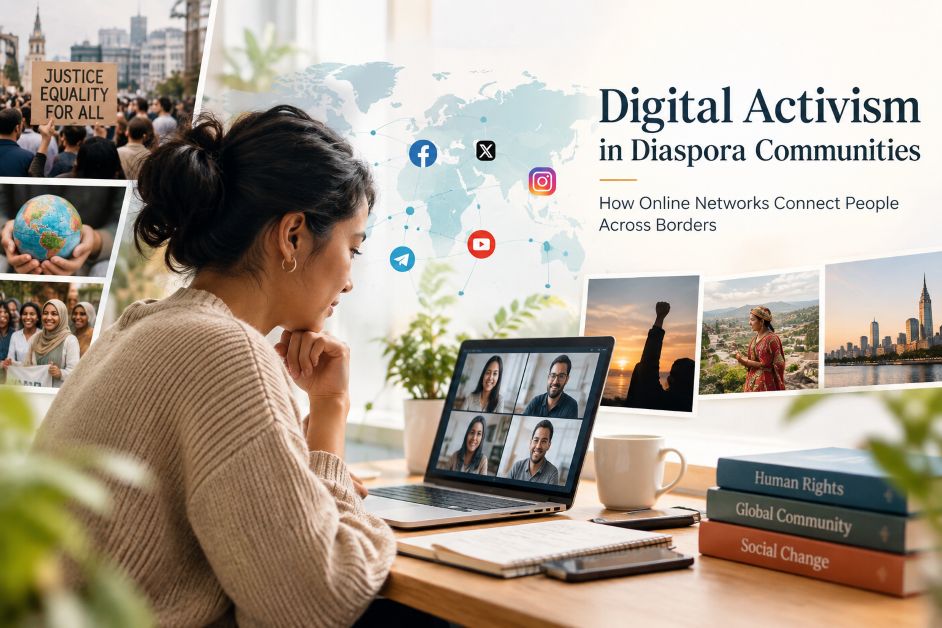
Diaspora digital activism has changed how people living outside their homeland communicate, organize, and participate in issues that matter to their communities. Distance no longer means complete separation. Through social media, messaging platforms, digital campaigns, and online community spaces, people can remain connected to their homeland while building relationships in their host countries.
For many migrants, digital spaces provide more than communication. They create opportunities for activists across borders to share experiences, raise awareness, preserve cultural identity, and participate in transnational political engagement. These online networks can also help diaspora communities maintain virtual communities where shared memories, concerns, and hopes remain alive.
At the same time, online activism brings serious challenges. Surveillance, misinformation, harassment, unequal access to technology, and emotional exhaustion can affect people who participate in cross-border advocacy. Understanding both the opportunities and risks of digital activism is important for diaspora communities today.
What Is Diaspora Digital Activism?
Diaspora digital activism refers to the use of digital platforms and online networks by people living outside their country of origin to support social, political, humanitarian, cultural, or human rights causes.
Unlike traditional activism, digital activism does not always require people to meet in the same physical location. A person living thousands of miles away can share information, join an online campaign, communicate with organizations, or amplify a community issue through social media.
This form of digital diaspora activism connects migration with technology. It allows members of a diaspora to remain involved in homeland politics while also participating in civic life in their host country.
How Diaspora Communities Use Digital Platforms
Diaspora groups use Facebook groups, messaging applications, video platforms, websites, podcasts, and other social networks to exchange information and organize activities.
These platforms can support:
- Diaspora networks that connect people across countries
- Community organizing online
- Digital advocacy campaigns
- Online political participation
- Social media activism
- Fundraising and humanitarian communication
- Cultural and historical storytelling
- Online solidarity between communities
Digital platforms can therefore become important spaces for civic engagement and community connection.
Why Diaspora Communities Turn to Digital Activism
Migration creates physical distance, but it does not necessarily end emotional or political connections with home. For the person abroad, digital communication can provide an important way to remain connected with familiar communities, experiences, and conversations.
Maintaining Connection With Home
Digital communication makes it possible to follow news, communicate with relatives, and participate in conversations about the homeland.
For migrants, this connection can have a strong emotional dimension. The emotional meaning of home abroad often becomes clearer when physical distance separates people from familiar places, traditions, languages, and relationships.
Online spaces can help migrants maintain this connection without requiring constant physical travel.
Raising Awareness Internationally
Diaspora communities can also bring local issues to international audiences. A concern that receives limited attention in a migrant’s homeland may gain wider visibility when diaspora members communicate about it through international networks.
This makes digital advocacy an important tool for human rights campaigns, humanitarian causes, and community concerns.
Diaspora members may translate information, share firsthand experiences, contact organizations, or explain events to audiences who have little direct knowledge of the country involved.
Building Transnational Solidarity
Digital platforms allow people in different countries to respond to the same issue. A community member in Europe can communicate with another member in Asia, North America, or Australia within seconds.
These diaspora networks create opportunities for transnational activism and online solidarity. They can also connect diaspora organizations with journalists, researchers, civil society groups, and other communities.
How Social Media Has Changed Diaspora Mobilization
Social media has transformed diaspora mobilization by making communication faster, more accessible, and more visible.
Facebook and Community Networks
Facebook groups and pages can function as digital gathering places. Diaspora members can discuss current events, share community information, document experiences, and organize responses to important issues.
These spaces can strengthen collective identity because participants recognize shared experiences even when they live in different countries.
Hashtags, Video, and Livestreams
Hashtags can bring separate conversations together around a common topic. Videos and livestreams can also communicate events quickly and provide visual evidence or personal testimony.
This form of online resistance can be especially important when communities want to challenge limited visibility or communicate directly with international audiences.
However, visibility also creates responsibility. Content shared online can reach people far beyond the intended audience, making privacy and accuracy important considerations.
Encrypted Messaging and Decentralized Coordination
Private messaging platforms can help diaspora groups communicate when public platforms are unsuitable for sensitive discussions.
Digital communication can support decentralized coordination, allowing people to exchange information without relying on a single physical organization. Yet privacy is never guaranteed, and users should understand the risks associated with sharing sensitive information online.
Digital Activism and Diaspora Identity
Technology does more than facilitate activism. It can also influence how migrants understand themselves.
Rebuilding Collective Identity Online
Migration can create questions about belonging and identity. Online communities can provide spaces where migrants interact with people who share similar histories.
This can reinforce diaspora identity and strengthen collective identity among people who share similar histories, experiences, and concerns.
People can discuss language, traditions, political experiences, family history, and cultural memories. These conversations help maintain connections that might otherwise weaken through geographical separation.
Preserving Culture and Political Memory
Digital platforms can also preserve stories that might otherwise disappear.
Digital storytelling allows migrants to record family experiences, historical memories, photographs, interviews, and community traditions. In this sense, activism can overlap with cultural preservation.
The practice of storytelling across generations can help younger members understand where their families came from and why particular issues remain important.
Likewise, family stories preserving heritage can keep cultural memory alive even when children and grandchildren grow up far from the homeland.
The Benefits of Diaspora Digital Activism
Diaspora digital activism offers several important benefits when practiced responsibly.
Amplifying Marginalized Voices
Digital platforms can give communities opportunities to communicate directly with broader audiences. Personal stories can challenge stereotypes and provide perspectives that may be missing from mainstream discussions.
Connecting Activists and Organizations
Online networks can connect individuals with organizations working on similar causes. This can encourage cooperation between diaspora groups and civil society organizations in different countries.
Supporting Humanitarian and Advocacy Efforts
Diaspora communities can use digital spaces to share verified information about humanitarian situations, coordinate community support, and draw attention to urgent concerns.
Digital tools can therefore strengthen cross-border advocacy while helping people remain connected to communities in need.
The Risks and Limitations of Digital Activism
Digital activism also carries risks that diaspora communities should take seriously.
Surveillance and Transnational Repression
Some activists face monitoring, intimidation, harassment, or other forms of transnational repression because of their political activities.
For diaspora members involved in activism abroad, digital communication can create additional vulnerabilities because online activity can leave records, expose relationships, or reveal personal information.
For some diaspora members, concerns about relatives who remain in the homeland can also influence their willingness to participate publicly.
Misinformation and Disinformation
The speed of social media can help accurate information spread, but it can also accelerate false claims.
Activists who share unverified information may unintentionally damage their credibility or put other people at risk. Responsible digital activism therefore requires checking sources before reposting claims.
Digital Divide and Unequal Participation
Not everyone has equal access to reliable internet, digital devices, or digital education. Differences in age, income, education, language, location, and technical skills can influence who participates in online communities.
The digital divide can therefore create unequal representation within diaspora groups.
Harassment, Polarization, and Burnout
Online activism can become emotionally demanding. Arguments, harassment, hostile comments, and constant exposure to difficult news can lead to stress and exhaustion.
Long-term political engagement abroad requires attention not only to the cause but also to the well-being of the people involved.
Digital Activism and the Next Generation
The future of diaspora activism is closely connected to how younger generations understand their relationship with heritage and home.
Storytelling Across Generations
Storytelling across generations can connect digital activism with family memory. Older migrants may carry firsthand knowledge of political events, migration experiences, and cultural traditions that younger family members have never experienced directly.
Digital tools can help preserve these stories in accessible forms.
Family Stories Preserving Heritage
The process of family stories preserving heritage is not only about remembering the past. It can also influence how younger people understand identity, responsibility, and belonging.
A recorded interview, photograph, family history, or personal account can become a lasting cultural resource.
The Emotional Meaning of Home Abroad
Digital connections can also reveal the emotional meaning of home abroad. Migrants may live comfortably in another country while continuing to feel emotionally connected to the place where they were raised.
This feeling can shape cultural participation, political interests, and relationships with other members of the diaspora.
Aging Gracefully in Migration
For older migrants, digital communities can provide another way to remain socially and culturally connected. Aging gracefully in migration can include maintaining relationships with family members, sharing memories with younger generations, and remaining involved in community life.
Digital participation does not replace physical relationships, but it can provide another channel for connection.
How Diaspora Communities Can Practice Responsible Digital Activism
Effective diaspora digital activism requires more than visibility. It requires responsibility.
Verify Before Sharing
Activists should check the source, date, context, and credibility of information before sharing it.
Protect Vulnerable People
Personal information, photographs, locations, and identifying details should not be shared without considering the possible consequences.
Center Affected Communities
Digital campaigns should respect the voices and experiences of people directly affected by an issue rather than speaking over them.
Balance Visibility With Personal Well-Being
Activism does not require constant online participation. People can choose when and how they engage while maintaining healthy boundaries.
FAQs About Diaspora Digital Activism
What is diaspora digital activism?
Diaspora digital activism is the use of digital platforms by people living outside their homeland to support political, social, cultural, humanitarian, or human rights causes connected to their communities.
Why is digital activism important for diaspora communities?
It allows migrants to remain connected with their homeland, communicate across borders, raise awareness, support causes, and participate in transnational activism without being physically present in the country of origin.
What are the risks of digital diaspora activism?
Major risks include transnational repression, surveillance, harassment, misinformation, privacy concerns, polarization, and emotional burnout.
How does social media support diaspora communities?
Social media creates virtual communities where diaspora members can exchange information, preserve cultural memories, organize activities, and maintain relationships across countries.
Can digital activism preserve cultural identity?
Yes. Digital storytelling, family archives, cultural discussions, and storytelling across generations can help preserve language, history, traditions, and collective memory.
Conclusion
Diaspora digital activism has created new ways for migrants to participate in the political, social, and cultural life of communities across borders. Digital platforms can connect people, amplify voices, preserve memories, and strengthen diaspora networks.
At the same time, online activism requires care. Privacy risks, misinformation, unequal access, harassment, and emotional exhaustion can affect both individuals and communities.
The most meaningful digital activism does not depend only on how widely a message travels. It also depends on accuracy, responsibility, empathy, and respect for the people behind the issue.
For diaspora communities, the digital world can become more than a place for communication. It can become a space where identity, memory, advocacy, and belonging continue to develop across generations and across borders.


