


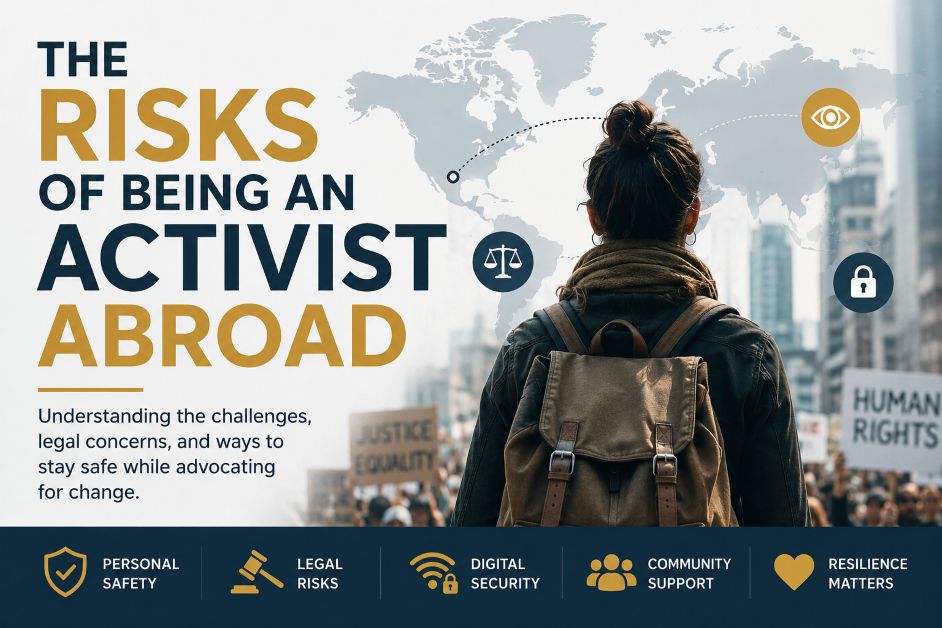
Advocacy has always been a powerful way to promote human rights, social justice, and democratic participation. Today, people who relocate and experience living abroad often continue speaking out on issues that matter to them, whether those issues involve their homeland or global concerns. While living overseas can offer greater opportunities to connect with international communities, it does not always remove the dangers associated with public advocacy. In many situations, The Risks of being an Activist Abroad remain significant and can extend beyond national borders.
Modern technology, international cooperation, and online communication have made it easier for governments, organizations, and individuals to monitor public activities. As a result, activism abroad may involve challenges that go far beyond participating in peaceful demonstrations or sharing opinions online. Government monitoring, digital surveillance, online harassment, and legal uncertainties can affect an individual’s safety, career, and emotional well-being.
Many individuals who engage in political activism overseas or human rights activism do so because they believe in protecting civil liberties, supporting vulnerable communities, or encouraging democratic reform. Others continue their advocacy after migration because their personal experiences inspire them to remain connected with events in their country of origin. Whether someone participates in international advocacy, supports migrant advocacy, or contributes to community solidarity, understanding potential risks is essential.
This guide explores The Risks of being an Activist Abroad, explains why those risks exist, and provides practical insights into staying informed, protecting personal security, and participating responsibly in advocacy efforts.
What Does It Mean to Be an Activist Abroad?
Being an activist abroad means supporting social, political, environmental, or humanitarian causes while living outside one’s country of origin. For many people, relocation does not diminish their commitment to justice or equality. Instead, it often creates new opportunities for overseas activism and collaboration with international organizations.
Unlike domestic activism, cross-border activism frequently involves interacting with multiple legal systems, cultural expectations, and political environments. Activities that are considered lawful in one country may be restricted in another. This makes understanding local regulations an important part of responsible participation.
Advocacy can take many forms, including:
- Participating in peaceful public demonstrations
- Supporting human rights defenders
- Raising awareness through educational campaigns
- Organizing fundraising initiatives
- Writing articles and opinion pieces
- Engaging in digital activism abroad
- Promoting freedom of expression
- Building advocacy networks across countries
For many members of diaspora communities, activism is also a way to maintain cultural identity and remain connected with their homeland. These efforts often strengthen community solidarity while encouraging dialogue on important social issues.
Why Many Activists Continue Their Advocacy After Migration
Migration changes where people live, but it does not necessarily change what they care about. Individuals who have experienced conflict, discrimination, or political unrest often continue speaking about these issues after settling elsewhere.
Many people involved in activism after migration believe that living abroad provides opportunities to raise international awareness and contribute to meaningful conversations about justice and accountability. Others participate because they wish to support family members, local organizations, or vulnerable communities affected by ongoing challenges.
For some, involvement in diaspora activism also reflects a desire to preserve historical memory and encourage informed public discussion. Conversations surrounding the legacy of the underground movement in modern Philippines illustrate how historical experiences continue to influence civic engagement and public dialogue today. Examining these historical developments can help readers better understand the context behind modern advocacy while encouraging respectful and evidence-based discussions.
Similarly, stories shared by overseas Filipinos in the Netherlands demonstrate how migrant communities often remain engaged with developments in both their adopted country and their homeland. Their experiences highlight the importance of balancing civic participation with personal safety, legal awareness, and cultural understanding.
These examples show that activism often extends beyond geography. People continue advocating because they value democratic participation, social justice, and the protection of fundamental rights, regardless of where they live.
The Biggest Risks of Being an Activist Abroad
While advocacy can create positive social change, it can also expose individuals to various personal, legal, and digital challenges. Understanding these risks allows activists to make informed decisions before participating in public campaigns or online discussions.
Government Surveillance Beyond National Borders
One of the most widely discussed concerns is cross-border surveillance. Advances in technology have made international communication easier, but they have also increased opportunities for governments and other organizations to monitor online activities.
Modern surveillance technology can include monitoring public social media posts, collecting publicly available information, and tracking online interactions. Individuals involved in activism in exile or overseas advocacy may become more visible simply because they speak publicly about controversial issues.
Although laws vary widely across countries, many experts recommend practicing good digital privacy habits regardless of where someone lives. Limiting unnecessary public information, verifying communication channels, and understanding local regulations all contribute to stronger activist security.
Legal Risks in Different Countries
Another important aspect of The Risks of Being an Activist Abroad involves legal systems. Every country has different laws governing public demonstrations, political expression, public assembly, and online communication.
Participating in activities without understanding local regulations may result in unexpected legal consequences. Some jurisdictions require permits for demonstrations, while others place restrictions on certain forms of political activity.
Individuals involved in international activism should become familiar with:
- Local protest regulations
- Immigration requirements
- Public assembly laws
- Rules regarding political organizations
- Restrictions affecting non-citizens
Understanding these legal frameworks helps reduce unnecessary risks while supporting responsible civic participation.
For migrants, concerns may also include immigration consequences, residency requirements, or compliance with visa conditions. While peaceful advocacy is protected differently across jurisdictions, remaining informed about applicable laws is always advisable.
Online Harassment and Cybersecurity Threats
The internet has transformed advocacy by allowing people to reach international audiences almost instantly. However, increased visibility also creates opportunities for online harassment, misinformation, impersonation, and malicious cyber activity.
Individuals engaged in digital activism abroad sometimes experience:
- Targeted harassment
- Fake social media accounts
- Cyber threats
- Attempts at doxxing
- Phishing attacks
- Unauthorized access to personal accounts
Practicing strong digital safety habits significantly reduces these risks. Using encrypted messaging, enabling multi-factor authentication, creating strong passwords, and regularly updating software all contribute to better personal protection.
Developing secure communication practices also supports secure communication within advocacy groups while helping protect sensitive conversations from unauthorized access.
Threats Against Family Members Back Home
One of the most overlooked aspects of The Risks of Being an Activist Abroad is the potential impact on loved ones who remain in an individual’s country of origin. While many activists accept personal risks associated with public advocacy, concerns often grow when family members become indirect targets of intimidation or unwanted attention.
In some situations, relatives may experience increased scrutiny, social pressure, or emotional stress because of a family member’s public activities. Although these experiences vary widely depending on local circumstances, they highlight why responsible advocacy should include consideration for the well-being of family and close friends.
Maintaining open communication, respecting privacy, and avoiding the unnecessary sharing of personal information online can help reduce exposure. These precautions are especially important for those engaged in overseas advocacy, diaspora activism, and community solidarity initiatives that receive significant public attention.
Understanding Transnational Repression
What Is Transnational Repression?
Transnational repression refers to actions taken by governments or affiliated groups to influence, intimidate, monitor, or pressure individuals living outside their country of origin. These actions may occur across borders and can affect journalists, academics, human rights defenders, political dissidents, and members of diaspora communities.
Although not every activist will encounter these challenges, understanding the concept helps explain why activist security has become an increasingly important topic in international discussions.
Common Tactics Used Against Overseas Activists
Methods of transnational repression vary depending on local laws, technology, and political conditions. Common examples include:
- Government monitoring of public online activities
- Coordinated misinformation campaigns
- Identity impersonation
- Attempts to obtain personal information
- Online harassment
- Pressure directed toward relatives or professional contacts
Recognizing these tactics allows activists to adopt safer communication practices and respond more effectively if concerns arise.
Psychological and Emotional Challenges
Living With Constant Uncertainty
Public advocacy often involves emotional resilience. Individuals participating in international advocacy or political activism overseas may experience uncertainty about future travel, employment opportunities, or public perception.
Remaining informed without becoming overwhelmed is an important part of maintaining long-term well-being.
Activist Burnout
Long-term advocacy can contribute to activist burnout, especially when individuals balance employment, family responsibilities, and volunteer work alongside activism.
Signs of burnout may include:
- Emotional exhaustion
- Reduced motivation
- Difficulty concentrating
- Increased stress
- Compassion fatigue
Taking regular breaks, sharing responsibilities within advocacy networks, and setting realistic expectations can help individuals maintain sustainable involvement in important causes.
Social Isolation
Relocating to another country can already be emotionally challenging. Adding activism may increase feelings of isolation, particularly when individuals fear misunderstanding or criticism.
Building supportive relationships through trusted organizations and local communities encourages community solidarity while promoting healthy discussions based on mutual respect.
The Importance of Family Support
Many activists find strength through supportive relationships with family members and close friends. Conversations about resilience often remind us of the unconditional love of mothers in challenging times, highlighting how encouragement and understanding can provide emotional stability during difficult periods.
Strong personal support systems do not eliminate challenges, but they often help individuals navigate uncertainty with greater confidence and balance.
How Activists Can Protect Themselves Abroad
Understanding the Risks of Being an Activist Abroad is only one part of responsible advocacy. Taking proactive steps can reduce unnecessary exposure while allowing individuals to participate safely and legally.
Learn Local Laws Before Participating
Before attending demonstrations or joining campaigns, research:
- Public assembly regulations
- Local protest laws
- Immigration requirements
- Restrictions affecting non-citizens
- Rules governing political organizations
Legal awareness supports informed civic participation and helps avoid preventable misunderstandings.
Strengthen Digital Security
Good digital privacy practices are essential for modern activism.
Recommended steps include:
- Enable multi-factor authentication.
- Use unique passwords with a password manager.
- Communicate through encrypted messaging platforms when appropriate.
- Keep devices updated.
- Avoid sharing unnecessary personal information publicly.
- Review privacy settings regularly.
These habits improve digital safety while reducing exposure to cyber threats.
Build Trusted Networks
Working with established organizations and reliable community partners helps improve communication and accountability.
Strong advocacy networks also provide opportunities to exchange knowledge, verify information, and promote responsible social justice initiatives.
Document Incidents Responsibly
If harassment or suspicious activity occurs, maintain accurate records that include dates, screenshots where appropriate, and relevant details.
Documentation may prove useful when reporting concerns to platform administrators, employers, legal professionals, or appropriate authorities.
Know Available Resources
Understanding local emergency procedures, legal assistance options, and community support services can provide additional confidence during unexpected situations.
Preparation encourages informed decision-making rather than reactive responses.
Ethical Considerations for International Activism
Responsible advocacy extends beyond promoting a cause. Ethical activism requires respect for local communities, accurate information, and constructive dialogue.
Good practices include:
- Verify information before sharing.
- Respect cultural differences.
- Avoid spreading misinformation.
- Encourage respectful discussions.
- Support peaceful engagement.
- Protect personal privacy and the privacy of others.
These principles strengthen democratic participation, encourage freedom of expression, and contribute to meaningful public conversations.
Frequently Asked Questions
Is it dangerous to be an activist abroad?
The level of risk depends on the country, local laws, the nature of the advocacy, and an individual’s public profile. Understanding The Risks of being an Activist Abroad, researching local regulations, and practicing good digital safety can help reduce unnecessary exposure.
Can governments monitor activists overseas?
In some circumstances, governments may monitor publicly available information or engage in cross-border surveillance. Practicing good digital privacy habits and using secure communication methods can improve personal protection.
Can activism affect visas or residency?
Immigration rules differ between countries. Individuals participating in international activism should understand local laws and any immigration consequences that may apply to non-citizens.
How can activists stay safe online?
Use strong passwords, enable multi-factor authentication, communicate through encrypted messaging, update software regularly, and remain alert to phishing, impersonation attempts, and online harassment.
Key Takeaways
Understanding the Risks of Being an Activist Abroad empowers individuals to make informed decisions while supporting causes they value. Responsible advocacy involves balancing commitment with preparation, respecting local laws, protecting personal information, and prioritizing well-being.
Whether someone participates in human rights activism, migrant advocacy, cross-border activism, or broader international advocacy, awareness remains one of the strongest forms of protection.
Historical experiences—including discussions surrounding the legacy of the underground movement in modern Philippines—continue to shape modern civic engagement, while the experiences of overseas Filipinos in the Netherlands illustrate how life in exile and migration can influence ongoing participation in public affairs. Likewise, reflections on chasing windmills often symbolize the persistence required to pursue meaningful change despite uncertainty.
Ultimately, informed activism is strengthened by preparation, resilience, and ethical responsibility. By promoting freedom of assembly, protecting civil liberties, encouraging community solidarity, and supporting human rights protection, individuals can contribute positively to society while reducing unnecessary risks.
Conclusion
Advocacy has long been a catalyst for positive social change, but it also carries responsibilities and challenges—especially for those living outside their country of origin. The Risks of Being an Activist Abroad include legal uncertainties, cross-border surveillance, government monitoring, online harassment, emotional strain, and potential impacts on family and professional life. Recognizing these realities does not discourage participation; instead, it encourages thoughtful, informed, and responsible engagement.
By understanding local laws, strengthening digital privacy, building trusted advocacy networks, and practicing secure communication, activists can better protect themselves while continuing to support meaningful causes. Every situation is unique, but preparation, ethical decision-making, and respect for local communities remain essential foundations for effective advocacy.
Have you experienced the challenges of advocacy while living overseas or witnessed how diaspora communities contribute to positive change? Share your thoughts in the comments, share this article with others who may find it valuable, and subscribe for more insights on migration, civic participation, and global social issues.


